Introduction: Understanding PPC Marketing
Digital marketing has revolutionized how businesses contact clients online. Pay-Per-Click (PPC) marketing is at the heart of this change. Unlike traditional advertising, digital marketing helps brands and businesses to promote their products and services online and reach their potential customers at the exact moment they are looking for solutions.
In today's era, the digital landscape keeps on expanding. Websites are flourishing at a breakneck speed and almost everyone from small to big businesses are on the internet. From franchises to eCom-brands everyone is looking for opportunities and leveraging all possible conversion channels. PPC is one of the main channels helping brands gain rapid visibility, quality visitors and measurable outcomes in competitive digital marketplaces.
If you’re running a small and medium-sized business or just getting started online, you might feel PPC is something only big brands can afford. However, the truth is you don’t need a massive budget just need to know how the system works. In this guide, you’ll learn what PPC marketing is and we’ll help you decide if pay-per-click (PPC) marketing is the right option for our business.
What Is PPC Marketing?
You’ve probably seen digital ads that pop up right up when you search something online. Or the ones that appear in your feed like they’ve been reading your mind. It’s easy to scroll past them without thinking twice. But behind those little boxes of text and buttons is a powerful marketing engine working 24/7 to grab attention and influence results.
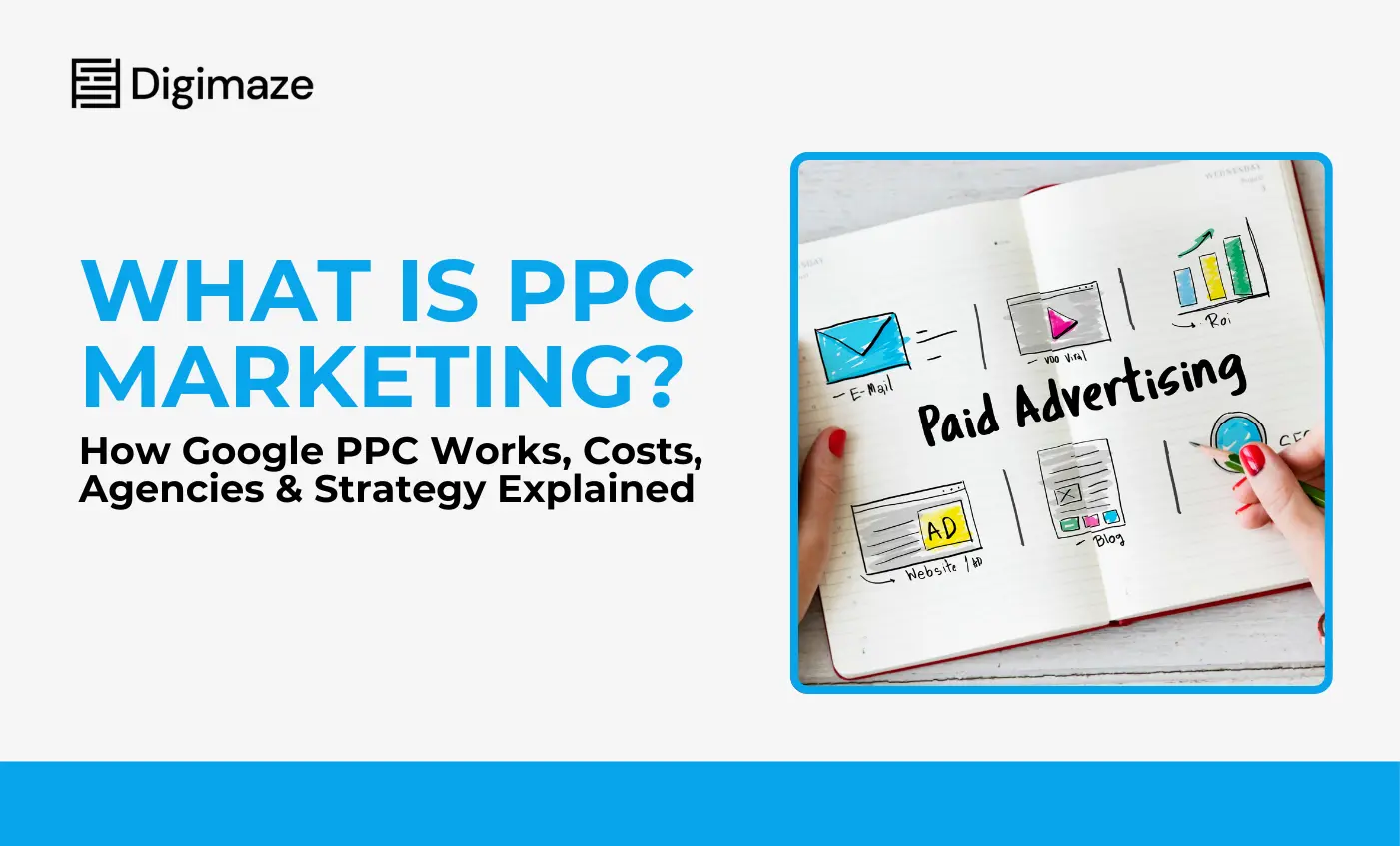
“PPC” Pay-Per-Click is one of the most popular forms of marketing in today’s world. It’s the only form of online advertising where you only pay when someone clicks on your ad. Historically, the terms PPC, SEM, and SEA were used interchangeably. These terms mainly refer to paid, primarily text-based, advertising on search engines via Google Ads (formerly known as Google Adwords) and Microsoft Ads (formerly known as Bing Ads).
It’s like renting a digital billboard, but instead of paying for views, you pay for clicks (or for someone to take action). That action could lead to a website visit, a product page view, or even a sale. You set the budget. You choose who sees the ad. And you only pay when someone’s interested enough to click.
Here are a few types of PPC ads you’ll likely come across:
Search ads: These show up at the top of search results when someone types in a relevant keyword.
Display ads: These are image or banner ads that appear on websites your audience is browsing.
Shopping ads: These show your product image, price, and link directly on platforms like Google Shopping.
Social media ads: Think Instagram, Facebook, or LinkedIn. You can run highly targeted campaigns based on user behavior.
Remarketing ads: These reengage people who’ve visited your site before but didn’t take action.
PPC is highly popular due to how targeted and trackable it is. Brands can choose who gets to see their ads, how much money to spend and also make changes real time to understand what’s working and what’s not.
How Does Google PPC Work?
Google PPC works through an auction system that operates every time a user searches on Google. Advertisers bid on keywords that are relevant to their products or services. When a user searches for a term on Google, it examines all qualifying ads to determine which ones appear and in what order.
Keywords play an important role since they represent user intent. Using the proper keywords means that ads show for searches that are more likely to convert. The bidding process allows advertisers to set the highest amount they are willing to spend for a click.
All of this happens in milliseconds. However, the higher bid does not ensure top placement. Google also considers Quality Score.
Google's Quality Score measures how relevant and helpful an ad is to users. The Quality Score is determined by click-through rate (CTR), keyword relevancy, ad copy quality, and landing page experience. Ad Rank is calculated by adding the bid amount and Quality Score together. A better Quality Score can save costs while increasing ad visibility.
The journey is simple. A user searches → the ad appears → the user clicks → lands on a relevant page → completes a desired action such as a purchase or form submission
How Much Does Google PPC Cost?
Google PPC (Pay-Per-Click) works on a cost-per-click (CPC) basis, meaning advertisers pay only when someone clicks on their ad. There is no fixed cost—CPC varies depending on competition, keywords, and ad quality.
For example, a local café advertising “coffee shop near me” might pay ₹10–₹30 per click, while a home loan company bidding on “apply for home loan” may pay ₹200+ per click because finance is more competitive.
Keywords with strong buying intent usually cost more. “Buy shoes online” will be more expensive than “best shoes brands” since the first shows clear purchase intent.
Quality Score also affects pricing. Well-written ads and relevant landing pages can lower CPC, even in competitive industries. Location targeting matters too—ads in major cities generally cost more than those in smaller towns.
In India, Google PPC costs typically range from ₹10 to ₹300+ per click. Businesses should start with a set budget, focus on high-intent keywords, and increase spending based on performance.
What Are Negative Keywords in PPC?
Negative keywords are search terms that prevent ads from appearing in irrelevant searches. They contribute to better targeting and better campaign quality.
Negative keywords are important because they prevent campaigns from being shown to users who are unlikely to convert.
A premium service provider, for example, may include "free," "cheap," or "jobs" as negative terms.
Negative keywords improve click quality, conversion rates, and total ROI by filtering out unnecessary traffic. Regular revisions to negative keyword lists improve marketing efficiency and cost-effectiveness.
What Is a PPC Agency?
A PPC agency helps businesses plan, manage, and optimize paid advertising campaigns forcing real results like leads and sales. They handle everything from keyword research and ad creation to bid management, tracking, and performance reporting.
For example, a real estate or e-commerce business may struggle with high ad costs or low-quality leads. A professional agency like DigiMaze uses data-driven strategies, better targeting, and continuous optimization to reduce wasted spend and improve conversions.
Compared to in-house management, PPC agencies offer greater experience, platform expertise, and scalability. Businesses with limited time, limited PPC knowledge, or larger ad budgets benefit the most by partnering with DigiMaze, allowing experts to drive growth while they focus on their core business.
How Much Do PPC Agencies Charge?
PPC agency pricing is typically based on scope of work, ad spend, and the level of expertise required. The most common pricing models among agencies include a percentage of ad spend, flat monthly fees, or performance-based pricing tied to results.
Generally, agencies charge 10% - 20% of their monthly ad spend or a fixed fee ranging from ₹20,000 to ₹1,50,000 per month. Pricing is influenced by campaign complexity, platforms used, reporting needs, and optimization frequency.
If you plan to hire a PPC agency for your business, the things to keep in mind are transparency, proven results, strategic thinking, and alignment with business goals over cost alone.
Building a Winning PPC Strategy
Keyword Research & Intent Targeting
Selecting the right keywords is the first step toward successful PPC. Focus on search intent rather than volume. Transactional and high-intent keywords typically perform better.
Ad Copy & Landing Page Optimization
Ad copy should be clear, relevant, and in line with user intent. Strong headlines and simple messaging increase CTR. Landing pages that load quickly, match ad messaging, and direct people to a conversion are also important.
Campaign Monitoring & Optimization
Winning PPC strategies are based on constant growth. Regular A/B testing, reliable conversion tracking, and performance analysis all contribute to campaign refining and long-term ROI improvement.
Is PPC Marketing Worth It?
PPC marketing is very effective when executed properly. It provides immediate visibility, precision targeting, and measurable results. While PPC offers instant results, long-term success requires optimization and data-driven decisions. Businesses have the most ROI when PPC is combined with clear goals, strong landing pages, and continual performance tracking.
Conclusion:
PPC marketing is an effective way to generate targeted traffic, leads, and sales. From knowing how Google PPC works to controlling costs and developing a good plan, success is dependent on experience and ongoing optimization. Whether carried out in-house or by an agency, a well-planned PPC strategy can strongly boost business expansion.

MUMBAI

PUNE